Should You Buy the Nuphy Air75 V3 in 2026? A Deep Dive
I've been using the Nuphy Air75 V3 as my daily driver for several months now, and I wanted to share a full, practical rundown from the perspective of someone who types, codes, and travels with a compact mechanical keyboard. This review covers build quality, typing experience, wireless behavior, software quirks, battery life, customization options, and how the V3 compares to a few satisfying alternatives I tested alongside it. My goal is to give you the kind of honest, hands-on feedback I wish I had before buying one.
Why I picked the Air75 V3
I wanted a compact 75% layout that felt closer to a full-size keyboard in ergonomics but without the wasted desk space. I care about wireless reliability (for laptop travel), a satisfying tactile typing feel, and reasonable configurability without diving into flashing firmwares day-one. The Air75 V3 promised to be an iteration that fixed small annoyances I'd seen in earlier models, so I decided to buy the hot-swap version and live with it for a few months.
First impressions and build quality
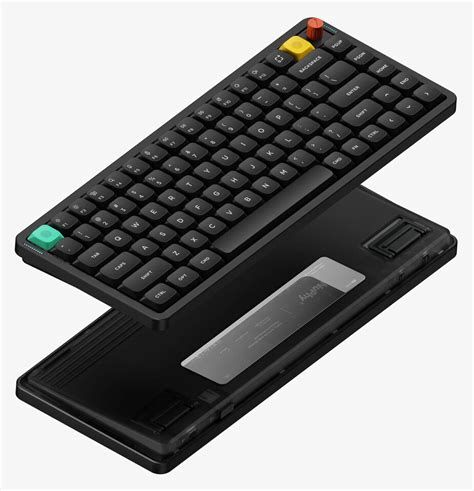
Out of the box I noticed the Air75 V3 is noticeably refined compared to cheaper 75% boards. The case has a low-profile aesthetic and a subtle weight that makes it feel premium without being heavy. The keycaps on my unit were PBT with a slightly textured finish that didn't pick up oil quickly — I appreciated that right away. The plate and frame tolerances were tight: there was no visible wobble between the top and bottom halves, and the USB-C port felt solid when I plugged in a cable.
One thing I paid attention to was the stabilizers. In my experience, Nuphy has improved their stabilizer tuning since earlier releases: the spacebar and long keys on my V3 were quieter and less rattly than many stock stabilizers I've tested. They still aren't perfect compared to a carefully-lubed aftermarket set, but I could use the keyboard immediately without feeling compelled to tear it down and mod it.
Typing experience: switches, sound, and travel
I tested the Air75 V3 with a set of tactile hot-swap switches I installed myself. The hot-swap sockets worked reliably — I swapped several different switch types over the weeks to dial in a feel I liked. The typing profile is compact and slightly angled, which made transition from a full-size board pleasantly seamless. Key travel feels balanced: not ultra-shallow like some low-profile boards, but not deep either. That middle ground is what I enjoyed most for long typing sessions.
Sound is subjective, but here's what I noticed: with stock keycaps and my chosen switches, the V3 produced a crisp, tight sound with moderate sustain. It wasn't the pingy, metallic ring I sometimes hear on cheaper aluminum plates. If you care about a very specific sound signature, you should expect to tune the stabilizers and possibly test different switches. For me, the default sound was pleasant and didn't distract during calls or when recording quick voice clips.
Wireless performance and battery life
Wireless is an area where I've spent a lot of time testing this board. I used the V3 in three modes: Bluetooth (paired with a laptop and a phone), 2.4 GHz via the included dongle, and wired USB-C. In my everyday workflow — mixed typing, occasional gaming, and switching between a laptop and tablet — the 2.4 GHz connection was the most consistent. Bluetooth was convenient for quick pairing with a phone, but I found occasional one-second input lag spikes when I had many devices active on Bluetooth nearby. That didn't happen on the 2.4 GHz dongle.
Looking for the best Laptops & Computers deals on Amazon?
Shop Amazon →Battery life is always a practical question. After several weeks of mixed use (about 4–6 hours of typing per day, RGB mostly on a low animation level, and frequent device switching), I was getting roughly a week between charges. When I turned the RGB off entirely and used 2.4 GHz exclusively, the interval stretched to close to two weeks. Your mileage will vary — heavier RGB use, frequent Bluetooth switching, or long gaming sessions will shorten this — but I found the V3's battery life to be acceptable for a wireless mechanical keyboard that I actually take out of the house.
Software and firmware
Setting up layers, remaps, and macros uses Nuphy's companion app. In my experience the app covers most needs but has some rough edges. It offers per-key remapping, multiple profiles, and simple macro recording. What I found was that profile switching works, but the app occasionally had UI sluggishness on my laptop. Firmware updates were simple when they were released, but I did experience one update that required a retry because my unit went to sleep during flashing — an easily avoidable annoyance, but worth mentioning.
If you rely heavily on advanced macros or want a community-backed ecosystem of firmware, this might feel slightly limiting compared to the most open-source-focused keyboards. That said, for day-to-day remapping and lighting control, the app is fine once you accept a few small hiccups.
Customization and modding
Because I bought the hot-swap model, I could try different switch types without soldering. The sockets are robust enough to withstand multiple swap cycles. The keycaps that come with the V3 are good — thick PBT — but if you're the sort who loves to swap keycap sets, the keyboard accepts most standard 75% layouts. I also appreciated that the case is screw-accessible: after a few minutes you can get at the internals to apply a basic foam mod for a quieter sound if you want to tweak acoustics.
One thing that bothered me: the screw holes and internals are compact, and if you're new to modding, accessing certain spots for deep dampening requires patience. The plate is also not easily replaceable without a careful teardown, so if you plan to change the plate material frequently, plan accordingly.
What I appreciated most
- Compact, practical 75% layout: It keeps dedicated arrow keys and cluster functionality without taking a full tenkeyless footprint.
- Balanced sound and solid stabilizers: Usable out of the box without immediate need for heavy modding.
- Reliable 2.4 GHz wireless: Excellent for laptop travel and desk use where Bluetooth can be flaky.
- Hot-swap convenience: Swapping switches is painless and encouraged experimentation.
- PBT keycaps: Pleasant texture and durability from day one.
Specific disappointments
- Companion app quirks: It works but can be sluggish; firmware flashing once demanded multiple attempts.
- Bluetooth lag under heavy device load: Bluetooth is fine for light use, but I saw momentary lag in crowded wireless environments.
- Deep modding access is snug: Adding multiple sound-dampening layers or swapping plates is possible but fiddly.
- Price sensitivity: Depending on the market and sales, the V3 sometimes sits near premium-priced options — it has to earn that premium with consistent software and long-term support.
Pros & Cons (quick list)
- Pros: Excellent 75% ergonomics, solid stock sound, dependable 2.4 GHz wireless, hot-swap sockets, good battery life for mixed use.
- Cons: Companion app needs polish, occasional Bluetooth hiccups, limited out-of-the-box modding headroom compared to custom boards.
Comparison: Air75 V3 vs a few alternatives
| Feature / Model | Nuphy Air75 V3 | Typical Premium 75% (example contemporary) | Compact TKL Wireless (example) |
|---|---|---|---|
| Layout | 75% with dedicated arrows and cluster | 75% similar, sometimes heavier case options | TKL—larger but more standard key spacing |
| Wireless | Bluetooth + 2.4 GHz + wired; reliable 2.4 GHz | Varies—some have stronger Bluetooth stacks, some lack dongles | Often better battery due to larger size, similar wireless options |
| Hot-swap | Available on my unit; easy swaps | Varies—many premium 75% are hot-swap | Often hot-swap on enthusiast models |
| Stock stabilizers | Quiet and decently tuned, minor improvements needed for perfection | Some premium boards ship with better tuning; others need modding | Comparable; depends on maker |
| Software | Functional but occasionally sluggish | Some offer more mature apps; others are minimal | Varies widely |
| Price vs value | Good value if you want wireless 75% and hot-swap | Premium alternatives may cost more for marginal gains | TKL alternatives may offer more customization per dollar |
Who should seriously consider the Air75 V3?
In my experience, the Air75 V3 is a strong pick if you want a compact board that feels close to a full-size keyboard ergonomically, but you also need portability and wireless reliability. It’s especially good for:
Looking for the best Laptops & Computers deals on Amazon?
View Offers →- Writers and programmers who want arrow keys and the cluster without a full desk footprint.
- People who switch between laptop and tablet and want a dongle-based wireless mode that behaves consistently.
- Users who like to experiment with switches but don’t want to solder — the hot-swap sockets are convenient.
If you love deep, community-driven firmware tinkering or absolute silence without doing any mods, you may find other boards more to your taste out of the box. I was tempted to mod the V3 further, but I didn't have to in order to enjoy daily typing.
Buying guide: practical checklist before you buy
Here are the specific things I checked and would advise you to confirm before clicking buy. I wrote this from the perspective of someone who already owned the V3 — these are the small decisions that affected my day-to-day satisfaction.
- Choose the right version: Confirm whether the listing is hot-swap or soldered. I recommend hot-swap unless you plan to solder often.
- Switch compatibility: Check the switch height you prefer; if you like deep travel, test that with a friend’s board or look for long-travel switch demos.
- Keycap profile: If the included keycaps matter to you, verify material and profile. I preferred the included PBT set; others may want OEM/Cherry/SA profiles.
- Wireless needs: If you need rock-solid Bluetooth in crowded environments, consider testing Bluetooth performance or plan to use the 2.4 GHz dongle for mission-critical tasks.
- Software expectations: Decide whether you need advanced macro support or frequent firmware flashing. The companion app is good for everyday remaps but not hyper-advanced workflows.
- Price vs alternatives: Compare the final price (including shipping and taxes) with similar 75% boards and decide if the wireless + hot-swap combo matches your priorities.
- Warranty and support: Look at seller warranty and regional support. Over months of ownership, responsive support matters when firmware or hardware questions arise.
Final notes from months of use
After living with the Nuphy Air75 V3 as my primary keyboard for months, what stands out most is its practical balance. It doesn't chase extremes — it isn’t the lightest, nor the most mod-friendly, nor the absolute quietest board possible. Instead, it nails a middle path: a comfortable typing feel, a smart wireless implementation with a useful dongle-driven 2.4 GHz mode, and hot-swap flexibility that made me experiment with switches without a soldering iron.
I was surprised by how quickly the layout felt natural on long coding sessions. I also noticed small trade-offs: Bluetooth can be temperamental if you rely on it in chaotic wireless environments, and the software occasionally reminded me the product still has room to mature. If you like to tinker and want the most customizable acoustic profile, factor in the time and small purchases needed for mods. If you want something that works reliably out of the box, the V3 is close to that ideal.
Conclusion
In my experience, the Nuphy Air75 V3 is a compelling choice in 2026 for someone who wants a versatile, wireless 75% keyboard with strong out-of-the-box ergonomics and the option to experiment with switches. It impressed me with its build quality and practical wireless performance, and while the software could use polish, that didn't stop me from enjoying daily typing and travel use. If those priorities match yours — compact usable layout, solid stock sound, and reliable 2.4 GHz wireless — the Air75 V3 is worth considering. If your priorities are absolute Bluetooth perfection or extreme modding convenience without any initial tinkering, you may want to compare a couple of other niche boards first.